In today’s fast-paced, hyper-connected world, knowing the exact location of assets, people, and workflows within indoor environments has become crucial for operational efficiency, safety, and strategic decision-making. While GPS has transformed outdoor navigation, it falls short when it comes to precise indoor tracking. This is where Real-Time Location Systems (RTLS) come into play — revolutionizing how industries track, manage, and optimize their resources within the four walls of their facilities.
This blog dives into the importance of indoor location tracking, explores the technologies behind RTLS, highlights real-world use cases, and demonstrates how different industries are leveraging precise location data to improve performance and safety.
What is Indoor Location Tracking?
Indoor location tracking refers to the technology and systems used to determine the real-time position of people, assets, or equipment within enclosed spaces like warehouses, hospitals, factories, office buildings, and malls. Unlike GPS, which struggles indoors due to signal attenuation and multipath interference, RTLS solutions use specialized hardware and software to deliver accurate, real-time data about the movement and location of tagged objects or individuals.
Understanding RTLS: The Backbone of Indoor Tracking
RTLS (Real-Time Location System) is a wireless solution designed to track the live location of assets and people within a defined indoor area. The system typically comprises three main components:
- Tags: Small wireless devices attached to people, assets, or equipment.
- Locators/Anchors: Installed across the facility to detect signals emitted by the tags.
- Software Platform: A user-friendly dashboard that displays live location data, generates alerts, and provides actionable insights.
What makes RTLS transformative is its ability to deliver precise, real-time location visibility — enabling businesses to optimize operations, enhance safety protocols, and make data-driven decisions.
Key Technologies Powering Indoor Location Systems
Several cutting-edge technologies are used in RTLS, each with its unique advantages:
1️. BLE AoA (Bluetooth Low Energy – Angle of Arrival)
BLE AoA is a highly accurate indoor positioning technology that calculates the direction from which a Bluetooth signal arrives at a locator. By using an antenna array, AoA determines the angle and thus the position of the tag with sub-meter accuracy. It’s ideal for applications requiring high precision, such as manufacturing, healthcare, and logistics.
2️. BLE RSSI (Received Signal Strength Indicator)
BLE RSSI measures the strength of a signal received from a BLE tag to estimate its distance from the locator. While not as precise as AoA, it’s cost-effective and suitable for proximity-based tracking applications like attendance tracking, asset finding, and zone-based monitoring.
3️. UWB (Ultra-Wideband)
UWB technology uses short radio pulses across a wide frequency spectrum to deliver centimeter-level accuracy. It’s highly resistant to signal interference and ideal for mission-critical environments like industrial plants where ultra-precise location data is essential &
Why Indoor Location Tracking Matters
Indoor location tracking isn’t just about knowing where something is — it’s about unlocking operational intelligence and creating a safer, smarter, and more efficient workplace. Key benefits include:
- Enhanced Operational Efficiency: Track and optimize the movement of assets, equipment, and personnel.
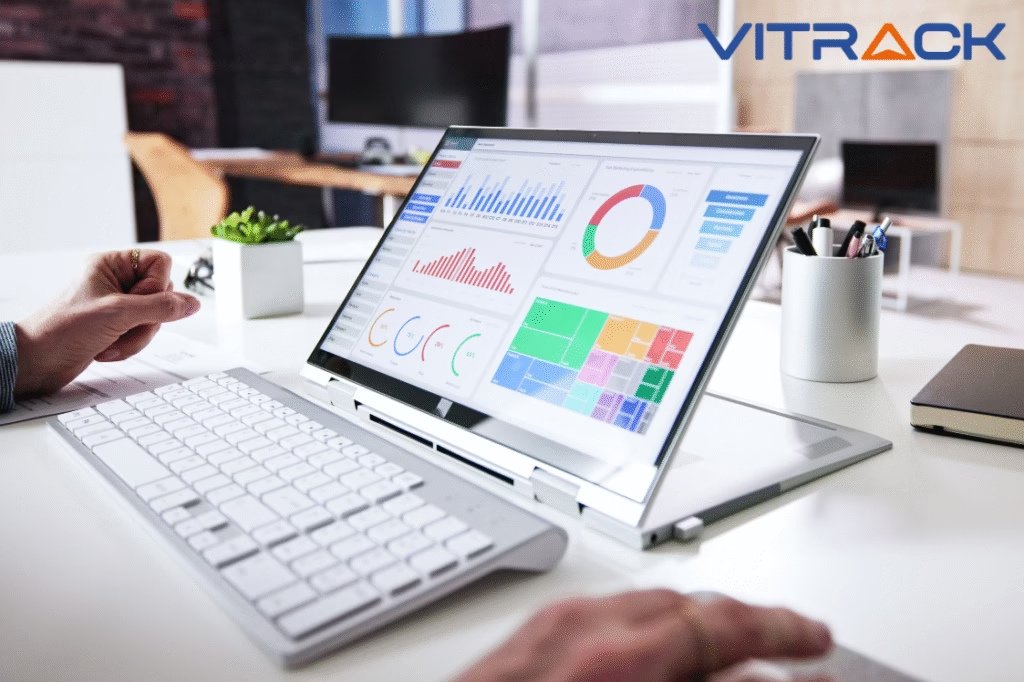
- Real-Time Visibility: Live dashboards displaying the location and status of critical resources.
- Improved Safety: Automate mustering during emergencies and trigger alerts for unauthorized area access.
- Reduced Operational Costs: Minimize asset loss and downtime by ensuring equipment is always where it’s needed.
- Data-Driven Insights: Analyze location data trends for better resource planning and operational improvements.
Use Cases Across Industries
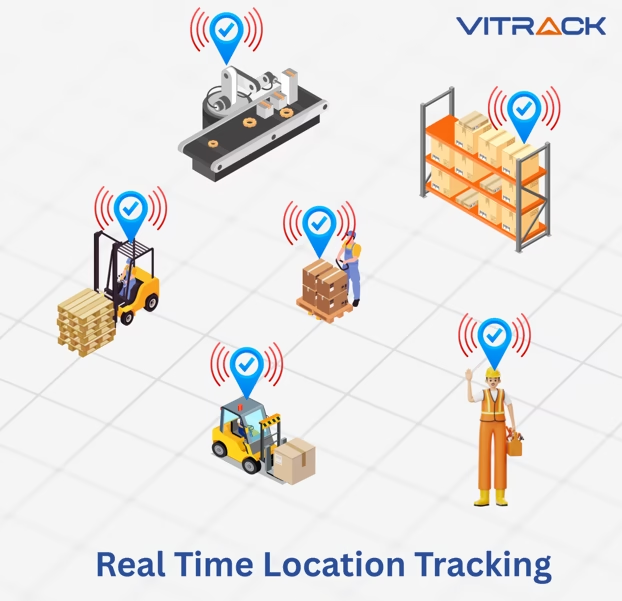
Manufacturing and Warehousing: Manufacturers and warehouse operators use RTLS for tracking forklifts, pallets, tools, and personnel. It helps in:
- Monitoring work-in-progress (WIP) status.
- Preventing asset misplacement.
- Improving workflow planning.
- Enforcing safety protocols in restricted areas.
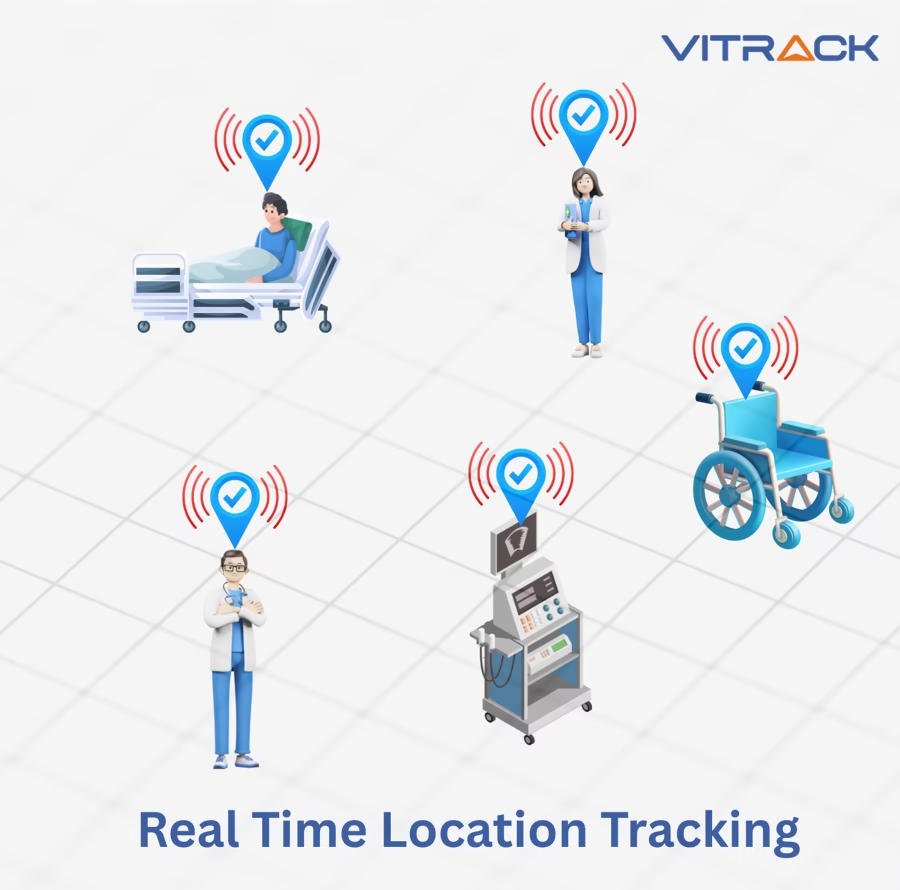
Healthcare: Hospitals deploy RTLS for asset tracking, patient monitoring, and staff safety:
- Track high-value medical equipment.
- Monitor patient movement and prevent wandering.
- Enable nurse call systems with location information.
- Automate staff mustering in emergencies.
Industrial Plants: In large industrial sites, RTLS ensures:
- Real-time tracking of vehicles, tools, and safety gear.
- Worker safety with SOS buttons on tags.
- Automated mustering and personnel location during evacuations.
Corporate Campuses: For large offices and campuses:
- Employee attendance and movement tracking.
- Optimize space utilization.
- Enhance visitor management and security.
Airports & Transportation Hubs: Track luggage, ground equipment, and personnel to:
- Improve turnaround times.
- Reduce delays.
- Enhance passenger safety and experience.
Location Data: Turning Raw Information into Actionable Insights
One of the most powerful outcomes of RTLS is the ability to convert raw location signals into valuable operational insights. The system logs every movement, event, and incident, enabling managers to:
- Generate heatmaps of asset and staff movement.
- Identify process bottlenecks.
- Track idle time of equipment.
- Optimize routes and workflows.
By integrating location data with existing ERP, MES, or hospital management systems, organizations gain unprecedented visibility into their operations.
Conclusion
As businesses strive for operational excellence in an increasingly connected world, indoor location tracking and RTLS have emerged as indispensable tools. By providing real-time, precise, and actionable location data, RTLS solutions empower organizations to enhance productivity, improve safety, and make informed decisions.
With advanced technologies like BLE AoA, BLE RSSI, and UWB, the possibilities for indoor positioning systems are endless — from tracking lifesaving medical devices in hospitals to optimizing complex workflows in manufacturing plants.
Indoor location tracking isn’t the future — it’s the present, redefining how industries operate beyond the walls of traditional systems.