In today’s fast-paced logistics and manufacturing environment, effective warehouse management has become a critical factor for operational success. With increasing pressure on companies to enhance efficiency, reduce operational costs, and improve customer satisfaction, adopting advanced technologies has become imperative. One such transformative solution is Real-Time Location Systems (RTLS), which are revolutionizing how businesses manage their warehouses, inventory, and operational workflows.
This blog will explore how Warehouse RTLS is redefining inventory tracking, forklift tracking, pallet management, and overall logistics optimization, while also contributing to better space utilization, improved order fulfillment, and streamlined returns management.
Understanding RTLS in Warehousing
Real-Time Location Systems (RTLS) are wireless technologies used to automatically identify and track the location of objects or people in real time, typically within a confined area like a warehouse or manufacturing plant. Using a combination of tags, sensors, and software, RTLS solutions provide precise and continuous visibility of asset movement, worker positioning, and inventory status.
Warehouses today rely on RTLS for efficient inventory tracking, ensuring every item, from raw materials to finished goods, is accounted for at all times. This technology minimizes manual errors, reduces search times, and allows for immediate access to asset location data.
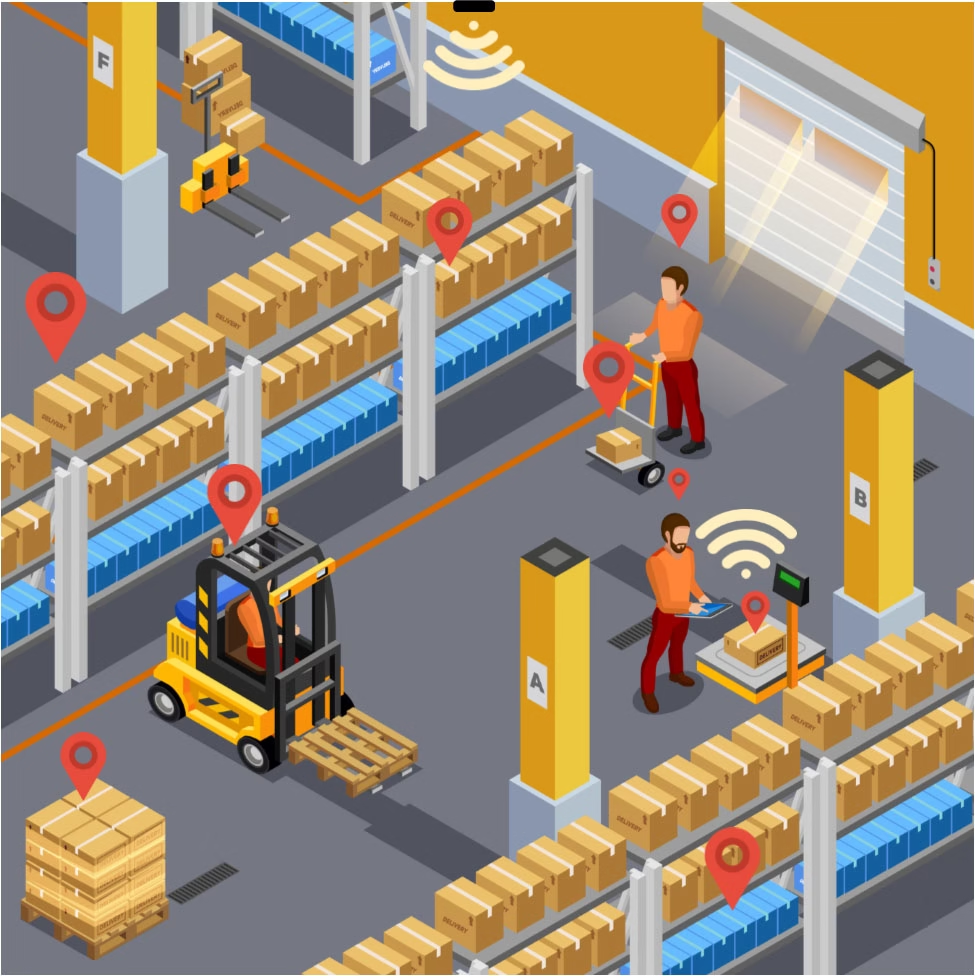
Key Applications of RTLS in Warehouse Management
1. Forklift Tracking
Forklifts play a crucial role in warehouse operations, handling the movement of heavy pallets and materials. With RTLS, companies can monitor forklift activities in real time, tracking their movement routes, idle times, and usage patterns. This data is invaluable for improving picking efficiency, optimizing task allocation, and enhancing overall operational safety.
By analyzing forklift tracking data, warehouses can reduce unnecessary travel paths, increase material handling speed, and implement preventive maintenance schedules to avoid downtime. Industry studies suggest that optimizing forklift operations with RTLS can lead to a 20% increase in material handling productivity.
2. Pallet Tracking
Pallets are the backbone of warehouse storage and logistics. RTLS enables businesses to track the precise location of pallets as they move through receiving, storage, picking, and shipping zones. This visibility not only aids in faster order fulfillment but also prevents loss or misplacement of valuable goods.
Real-time pallet tracking ensures that goods are stored in the correct locations, picked in the right sequence, and dispatched promptly, contributing to streamlined supply chain management. Warehouses have seen up to a 25% reduction in pallet search and retrieval times by integrating RTLS.
3. Order Fulfillment and Picking Efficiency
One of the most significant challenges in warehouse management is improving picking efficiency and meeting customer expectations for fast, accurate deliveries. RTLS enhances order picking processes by guiding workers to the exact location of inventory items, reducing search time and walking distance.
With real-time insights into inventory availability and location, order fulfillment becomes faster and more accurate, directly impacting customer satisfaction and operational productivity. Studies indicate that RTLS-enabled warehouses can achieve a 15-30% improvement in order picking speed.
4. Logistics Optimization and Space Utilization
Space is a valuable resource in any warehouse. RTLS data provides actionable insights into space usage patterns, identifying underutilized areas and congestion points. This enables warehouse managers to make informed decisions on layout adjustments, storage allocation, and workflow optimization.
By leveraging RTLS for logistics optimization and space utilization, businesses can increase storage capacity without physical expansion, streamline material flows, and reduce operational bottlenecks. Research has shown that RTLS-driven space optimization can enhance warehouse storage efficiency by up to 20%.
5. Zone-Based Access Control and Safety Compliance
In large warehouses and industrial facilities, managing access to specific operational zones is critical for ensuring workplace safety and regulatory compliance. RTLS makes it possible to monitor the movement of personnel and equipment in real time, enforcing access restrictions to hazardous or sensitive areas. If an unauthorized person or asset enters a restricted zone, the system can instantly trigger alerts to supervisors or activate safety protocols such as halting nearby machinery. This capability not only protects employees from potential hazards but also ensures compliance with safety standards and audit requirements, making RTLS a valuable tool for risk management in warehouse environments.
6. Workflow and Process Automation
Another significant application of RTLS in warehouse management is workflow and process automation. By providing continuous, real-time data on the movement of inventory, equipment, and staff, RTLS systems enable warehouses to automate several routine operational processes. For example, when a pallet arrives at a specific storage area, the system can automatically notify the nearest available forklift operator or update the inventory management system without manual scanning. RTLS can also dynamically assign picking tasks based on the real-time location of available workers and inventory. This automation not only speeds up daily operations but also reduces human error, enhances resource utilization, and improves overall operational consistency.
The Benefits of Implementing RTLS In Warehouse
Implementing an RTLS solution in a warehouse offers numerous advantages:
- Enhanced inventory accuracy: Minimized manual errors and real-time updates on stock levels.
- Operational efficiency: Improved picking efficiency, optimized forklift routes, and faster order fulfillment.
- Space optimization: Better space utilization through data-driven layout planning.
- Reduced operational costs: Lower labor costs and minimized inventory write-offs.
- Improved safety: Real-time monitoring of forklifts and personnel for enhanced workplace safety.
- Data-driven decision-making: Actionable analytics for continuous improvement in supply chain management.
Future Outlook: RTLS in Modern Warehousing
As e-commerce growth and customer expectations continue to rise, the demand for faster, error-free warehouse operations will intensify. Warehouse RTLS technology is poised to become an indispensable tool in achieving these goals. With advancements in sensor technology, data analytics, and system integration, the future will see even more sophisticated RTLS applications, including predictive analytics for inventory trends and AI-driven logistics optimization.
In conclusion, RTLS for inventory tracking, forklift tracking, pallet tracking, and order fulfillment offers a transformative opportunity for businesses aiming to stay competitive in a rapidly evolving market. By embracing RTLS, warehouses can significantly enhance operational efficiency, reduce costs, and deliver superior customer experiences.
For organizations looking to revolutionize their warehouse management, integrating Real-Time Location Systems is not just a technological upgrade—it’s a strategic investment in future-ready logistics excellence.