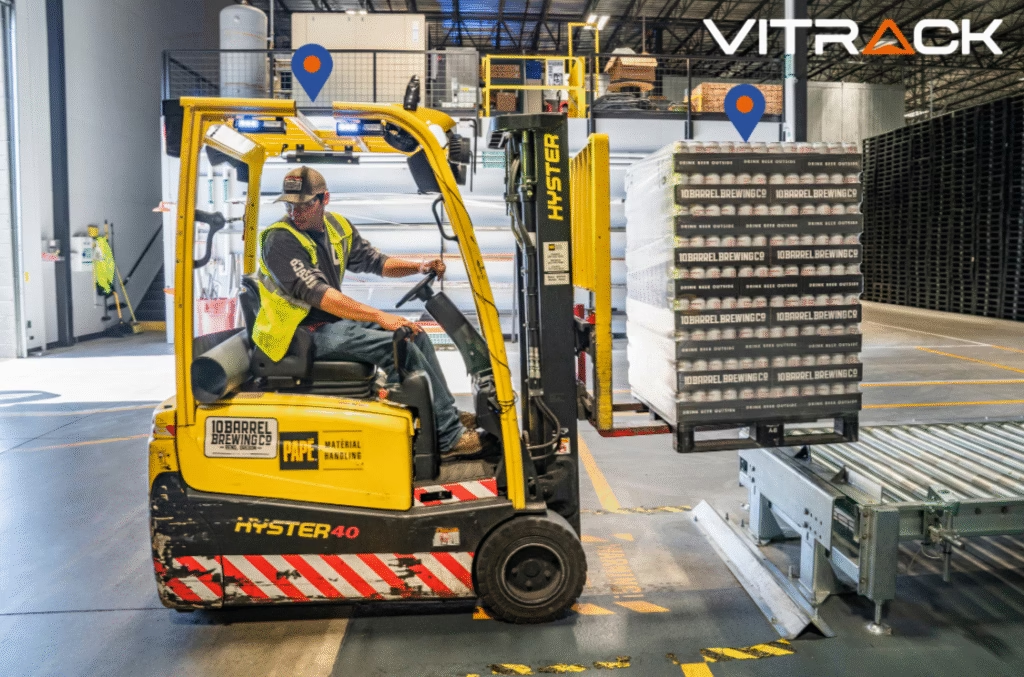
In modern manufacturing, the path from raw material to finished product often travels by forklifts and conveyor belts through the plant. These material flows are largely invisible to traditional systems. ViTrack Solutions changes that by deploying Real-Time Location System (RTLS) technology to make all movements visible. RTLS tags on vehicles, pallets, or tools broadcast their position continuously. The result is a real-time map of every forklift, cart, or pallet, plus rich data on how long each operation takes and where delays occur.
Real-Time Forklift and Equipment Tracking
Using IoT-based RTLS, manufacturers attach wireless tags to each forklift, tugger train, and other Material Handling Equipment (MHE) on the floor. These tags ping nearby receivers, yielding live location, orientation, and even speed of each vehicle. This lets managers see, on a digital map, exactly where every asset is. The technology also detects whether a forklift is moving or stopped, turning every machine into a data source.
Detailed Analytics and Reporting
The real power comes from data analytics. RTLS dashboards automatically generate usage reports and key performance metrics, such as driving vs. idle time and distance traveled for each forklift. This answers critical questions like:
- Which forklifts are under-used?
- Where do delays happen?
- Which route is busiest?
Key forklift KPIs include:
- Driving, stopping, and idle time
- Distance traveled by each vehicle
- Average and peak speed
- Number of loaded vs. unloaded trips
Managers use this data to improve utilization and overall equipment effectiveness (OEE). Dashboards also offer visual tools: path-history “spaghetti” diagrams plot each vehicle’s exact routes over time, while heatmaps show traffic density. Congested aisles and bottlenecks stand out on the map, so layouts or schedules can be adjusted.
Pallet and Finished Goods Tracking
The flow-tracking extends beyond vehicles. Forklifts carry tags on reusable pallets or bins, or the pallets themselves carry asset tags. This means finished goods can be tracked without manual scanning. When a container moves from production to storage, its RTLS tag updates its digital location automatically. This ensures fewer misplaced pallets, faster retrieval, and significant labor-hour savings.
Real-time forklift tracking also allows automated order booking and inventory updates, avoiding lookup errors and empty runs. In short, every finished-good pallet becomes visible in the system, eliminating lost loads and speeding up retrieval for shipping.
Geofencing and Zone-Based Analytics
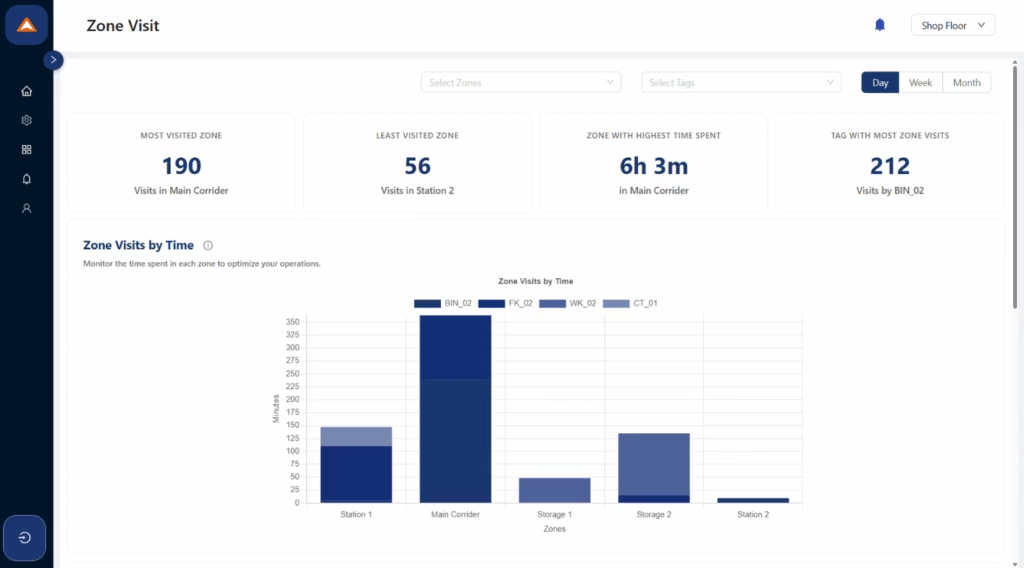
RTLS also enables “geofencing” around key areas. Managers can draw virtual zones on the warehouse map — for example, a restricted area or a priority packing zone — and configure alerts. If a forklift enters or stops in that zone, the system logs the event or triggers an alarm.
This enforces safety (like keeping heavy traffic out of pedestrian aisles) and provides zone-specific metrics (time spent unloading at each dock, for example). Meanwhile, heatmaps aggregate movement data across shifts, highlighting hot spots of congestion and under-used corridors. These visual analytics guide layout changes and scheduling to balance workloads and improve flow.
Worker Safety and Efficiency
In an Industry 4.0 factory, workers can be part of the tracking network too. ViTrack Solutions supports wearable tags for operators, enabling “connected worker” insights. The system can define safety zones and trigger alerts if personnel approach a moving forklift, greatly reducing collision risks.
On the productivity side, tracking how much time each operator spends at tasks provides data to refine labor scheduling. In this way, RTLS unifies visibility of material flows and human workflows on the shop floor.
Conclusion: Industry 4.0 and Operational Excellence
By making invisible flows visible, RTLS transforms plant operations. ViTrack Solutions’ tracking platform ties forklifts, pallets, tools, and workers into a unified digital map. The result is actionable intelligence: managers can slash idle time, optimize routes, and prevent delays.
Together, these gains increase equipment utilization, improve worker safety, and enhance operational efficiency. In the end, smart asset tracking is a cornerstone of the connected factory – driving productivity from forklifts to finished goods.