
In the rapidly evolving world of Industry 4.0 and IoT, businesses need to stay ahead. One technology that’s proving to be a game-changer is RTLS, or Real-Time Location Systems.
RTLS technology is transforming how businesses operate. It’s enabling real-time tracking of assets and people within a facility, optimizing production processes, and improving efficiency.
But the benefits of RTLS go beyond just operational efficiency. It’s also a key driver of innovation, enabling new business models and services. It’s helping businesses gain a competitive edge by reducing costs and increasing productivity.
Whether it’s in manufacturing, healthcare, logistics, or retail, RTLS is proving to be a must-have technology. It’s enhancing inventory control, asset management, and people tracking, among other things.
So, is your business ready for the future? This article will delve into why RTLS is a must-have technology for any forward-thinking business. Let’s explore how RTLS can prepare your business for the future.
Understanding RTLS Technology and Its Role in Industry 4.0
RTLS technology is revolutionizing industries by providing real-time location data. This data is invaluable for managing assets and tracking people within any environment. The impact of RTLS is felt across sectors, making it a cornerstone of Industry 4.0.
Industry 4.0 is characterized by the blend of digital technologies in manufacturing. RTLS plays a crucial role in this transformation. It links the physical and digital worlds, allowing seamless data integration. This connection boosts operational efficiency and precision in decision-making.
Beyond manufacturing, RTLS is pivotal in logistics and supply chain management. It ensures assets are monitored continuously, reducing the chances of misplacement. This monitoring capability translates into lower costs and higher resource utilization rates.
In smart factories, RTLS enhances production flows and minimizes downtime. By pinpointing the exact location of tools and materials, it accelerates production and reduces delays. This efficiency is essential for maintaining a competitive advantage in a fast-paced market.
Ultimately, RTLS is more than just a tracking system; it’s an enabler of innovation. It provides the foundation needed for IoT integration, data-driven insights, and predictive maintenance. Businesses leveraging RTLS are better equipped to thrive amidst the challenges of modern industry.
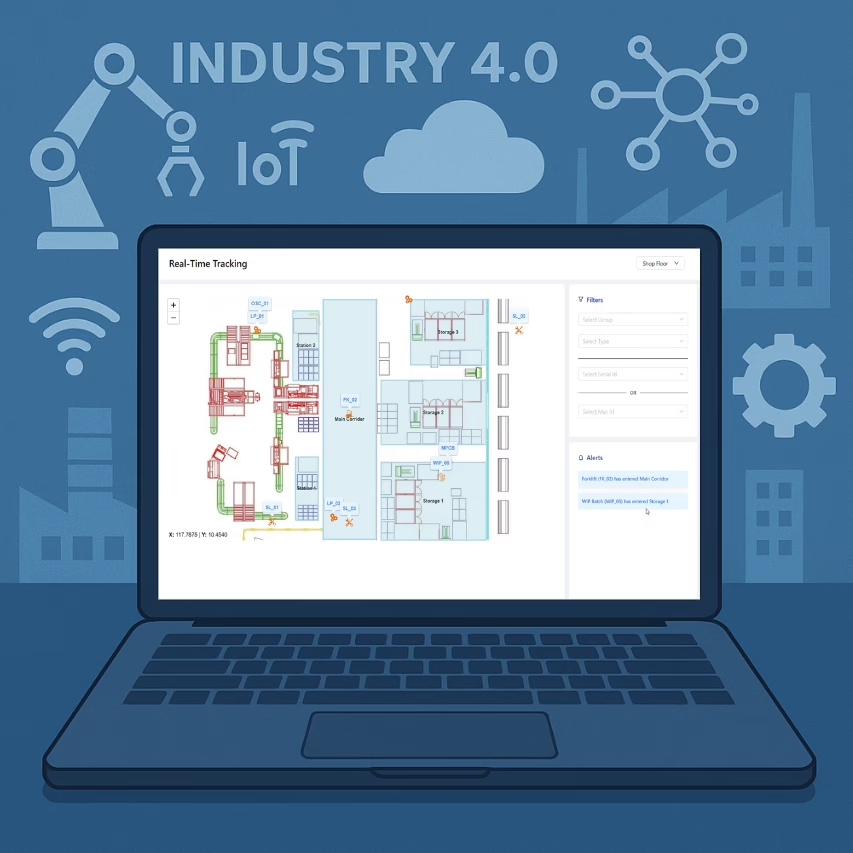
The Competitive Edge: How RTLS Drives Efficiency and Innovation
RTLS technology offers a remarkable competitive advantage by enhancing efficiency across operations. By delivering real-time insights, it reduces downtime and optimizes resource utilization. This boost in efficiency directly translates into increased productivity and cost savings.
Innovation is another area where RTLS shines brightly. The technology fosters new business models and services. By integrating with existing systems, it opens avenues for advanced analytics and data-driven strategies.
Businesses that implement RTLS can respond faster to market changes. This agility is crucial for staying ahead of competitors and adapting to consumer demands swiftly. As a result, RTLS empowers organizations to innovate continually and remain relevant in an evolving landscape.
Moreover, by minimizing operational bottlenecks, RTLS helps streamline processes. It provides a transparent view of asset locations, which is essential for coordinating complex operations. Ultimately, RTLS supports smarter decision-making and strategic planning.
Smart Factories and the IoT Ecosystem
Smart factories represent the next step in industrial evolution. They leverage cutting-edge technologies like RTLS to enhance operational capabilities. In these environments, RTLS seamlessly integrates with IoT systems.
The connection with the IoT ecosystem allows smart factories to communicate across different platforms. This communication ensures that production processes are optimized and synchronized. It also facilitates the proactive management of equipment and materials.
Through IoT integration, smart factories become more responsive and adaptive. They can anticipate changes, manage workflows in real-time, and reduce waste. This transformation is a significant milestone towards achieving Industry 4.0 goals.
Inventory Control and Asset Management with RTLS
In terms of asset management, RTLS minimizes losses and optimizes asset utilization. It tracks assets throughout their lifecycle, from acquisition to disposal. This tracking leads to higher efficiency and reduced costs associated with asset misplacement.
Moreover, RTLS contributes to timely maintenance and reduced downtime by monitoring asset conditions. Such proactive maintenance strategies extend asset life and enhance performance. Consequently, RTLS technology strengthens overall asset management.
People and Asset Tracking: Enhancing Safety and Productivity
RTLS significantly enhances safety within the workplace by providing real-time data on people movements. This tracking ensures compliance with safety protocols and improves emergency response. In case of an incident, locating personnel quickly is crucial.
For productivity, tracking people and assets ensures optimal workflow. RTLS helps in identifying and eliminating inefficiencies. It enables better coordination, reducing the time wasted on searching for tools and equipment.
Additionally, RTLS supports workforce management by offering insights into employee activities and movements. This data can inform strategies to boost productivity and streamline operations. Thus, RTLS not only enhances safety but also drives productivity improvements.
RTLS Technology: Methods and Applications
RTLS technology employs diverse methods to locate and track assets and people. These methods include UWB, BLE AoA and BLE RSSI each serving unique purposes and environments. Such flexibility makes RTLS adaptable to various industries and applications.
Applications of RTLS span across manufacturing, healthcare, logistics, and more. In hospitals, it ensures patients’ safety and tracks equipment, while in warehouses, it optimizes inventory management and asset location. Each application underscores RTLS’s versatility.
The technology supports compliance, enhances customer satisfaction, and increases transparency across supply chains. By providing real-time data, RTLS empowers businesses to make informed decisions and optimize operations efficiently.
Integrating RTLS with Other Business Systems
Integration with other business systems, such as ERP, WMS, and maintenance software, amplifies RTLS benefits. Such integration allows for seamless data flow across various platforms, enhancing overall operational efficiency. It creates a unified system that is easy to manage and optimize.
RTLS data can be used for advanced analytics, offering insights into asset utilization and workflow efficiencies. This data-driven approach helps identify performance gaps and areas needing improvement. As a result, businesses can adopt proactive strategies to optimize operations.
Moreover, RTLS enhances system interoperability, contributing to a more dynamic and responsive enterprise. By integrating with existing systems, it simplifies processes and fosters a coherent, interconnected operational environment.
Conclusion: Embracing RTLS for a Resilient and Agile Business Model
In today’s dynamic market, resilience and agility are paramount. RTLS technology equips businesses with the tools needed to adapt and thrive. By offering real-time insights, it empowers swift, informed decision-making.
Investing in RTLS not only drives efficiency but also fosters innovation. The technology’s ability to integrate with existing systems creates a seamless flow of information. This integration leads to optimized operations and improved resource management.
Adopting RTLS prepares businesses for the future, ensuring competitiveness. As industries become more interconnected, having robust location systems offers a significant advantage. In this ever-evolving landscape, RTLS represents a cornerstone of future success.